

When Travel Plans Change: Learning to Pivot on the Road
If you’ve ever planned a trip down to the last museum ticket, train time, and restaurant reservation, you already know this truth: travel doesn’t always follow the plan.
And honestly? That’s not a failure. It’s part of the experience—especially when you’re traveling solo.
Even the most experienced travelers sometimes need to pivot. Flights get delayed. Weather refuses to cooperate. Your body has opinions. Or you arrive somewhere you thought you’d love…and you don’t.
The skill that matters most isn’t perfect planning—it’s knowing how to adjust without letting the whole trip unravel.
Below are some common reasons you might need to pivot while traveling, along with ways to handle each one calmly and confidently.
When You Get Sick or Run Down
Sometimes your body simply calls the shots.
Jet lag hits harder than expected. A cold sneaks up on you. You push yourself a little too much and suddenly realize you’re exhausted instead of energized.
How to handle it:
Give yourself permission to rest without guilt
Cancel or reschedule non-essential plans
Focus on easy wins: nearby cafes, short walks, room service if needed
Remember that rest is productive when it helps you recover
→ I was so excited about my trip to Central Europe. So imagine how frustrated I was to land at my destination with a minor head cold, and wake up the next morning feeling like I’d been hit by a train! I quickly found that leaving my hotel room at all was a huge physical drain. What did I do?
First, I limited my activities, cancelling my afternoon plans in favor of napping in the air conditioned hotel room instead.
Next, I found a nearby pharmacy (look for the green cross in Europe) and used Google Translate to ask for some cold medicine.
I figured out the local food delivery app and had food delivered to the hotel rather than going out.
Finally, I researched options for cancelling the trip and heading back home if I didn’t feel better within a few days. Most of my hotels were refundable, but I would’ve lost money on the return flight. Still, if I continued to feel miserable, getting home to my own bed would have been worth the expense.
By the end of day three, I was feeling much revived. I decided to continue on the trip.

Flight Delays and Transportation Disruptions
Missed connections, canceled flights, rail strikes, or delayed ferries can throw even the best itinerary into chaos.
How to handle it:
Build buffer time into your schedule whenever possible
Keep essential items (meds, chargers, toiletries) in your carry-on
Know your rights for rebooking, refunds, or compensation
Focus on what you can control: food, water, information, and rest
→ Last year, I had a flight booked on British Airways from Europe to the U.S. that had a layover in London Heathrow airport. I woke up early on flight day to a bevy of conflicting email messages: my first flight was cancelled; my first flight was rebooked on Swiss Air to Zurich (with no onward flight to London or the U.S.); and my flight to Zurich was cancelled. The British Airways app had no information, and the call center directed me to the airport staff. So I headed to the airport. When I arrived, neither the British nor Swiss Air desks were open yet. Frustrated, I took a deep breath, found a place to sit down, and grabbed a snack from my bag.
Within 30 minutes, I had updates on the app and in my email. I was rescheduled on a United flight to Heathrow. It seems my originating flight was under booked, so British Airways had chosen to sell the flight to United rather than pay the required EU compensation fee. The new flight had the same departure and arrival times, so my original trip plans were actually unimpacted. It was a good reminder that sometimes I need to take a moment to breathe and let things happen.
Sites Being Closed or Unavailable
Museums close unexpectedly. Churches shut for services. Attractions are under renovation. Google doesn’t always know everything.
How to handle it:
Always have a short “Plan B” list for each day
Ask locals or hotel staff for alternatives
Use closures as a reason to wander, explore neighborhoods, or sit and observe
Remember that being present can be just as meaningful as checking boxes
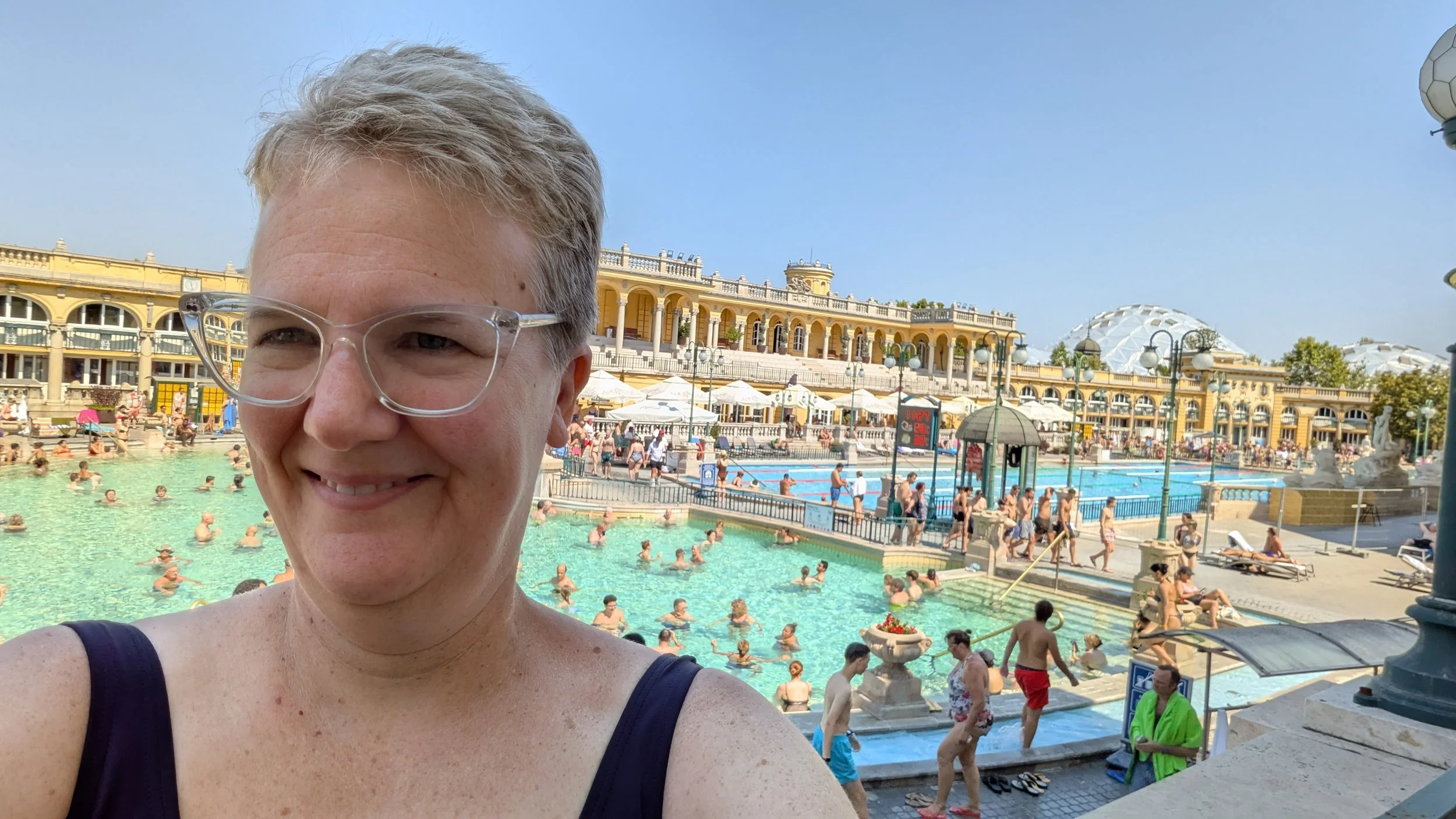
→ Last August, I found myself in the middle of a heat wave in Budapest, a city not used to temperatures over 100 degrees F. Sites were not air conditioned, and my planned walking tour just seemed stifling to me. Instead, I decided to explore Budapest’s many thermal baths. From art nouveau to Neo-Baroque to Ottoman, the baths are gorgeous architecturally and offered a great way to cool off from the heat. I didn’t get to see all the sites on my list, but I had a wonderfully relaxing three days!
Weather That Doesn’t Cooperate
Rain, heat waves, wind, or cold snaps can completely change how a destination feels.
How to handle it:
Adjust expectations rather than trying to force the original plan
Swap outdoor activities for indoor ones (or vice versa)
Slow down your pace instead of packing more in
Dress for comfort and safety, not photos
→ This past fall, I returned to Paris for a third time. With no plans for my first afternoon, I decided to walk through the Montmartre neighborhood and snap photos. Within 20 minutes of setting out, it started pouring down rain! I ducked into a nearby church. It wasn’t a famous church, but the architecture and stained glass were still stunning and made for great photos. When the downpour lightened to a drizzle, I stepped back outside for some lovely photos of rain-drenched Montmartre.

Realizing You Don’t Love a Place as Much as You Expected
This one can be surprisingly hard to admit.
You researched carefully. Everyone raved about it. And yet…you’re just not feeling it.
How to handle it:
Acknowledge the feeling without judgment
Stay curious: is it the neighborhood, the timing, or your energy level?
Change how you experience the place—different area, different activity, slower pace
If needed, shorten your stay and move on
→ On a previous trip to Spain, I was driving along the coast, stopping in small towns. I had a reservation for two nights in the town of Gandia. Arriving early that day, I started wandering around town, but quickly realized that the town was quiet and somewhat shuttered for the winter. In the mood for more activity, I went to the hotel reservation desk and explained that I wanted to move on. The concierge was kind enough to offer to transfer my reservation to their sister hotel in a larger city along the coast! I was soon back on the road, heading to a destination that would prove a much better fit for me.

Pivoting Is a Skill, Not a Setback
Travel rarely goes exactly as planned—and that doesn’t mean you’re doing it wrong.
Being able to pivot is what turns challenges into stories, stress into confidence, and disappointment into learning. Each adjustment builds trust in yourself: I can handle this. I can figure it out.
And when you’re traveling solo, that skill becomes one of your greatest strengths.
Because the real success of a trip isn’t how closely you followed the plan—it’s how well you met the moment you were actually given.